by Larry Magid
This post first appeared in the Mercury News
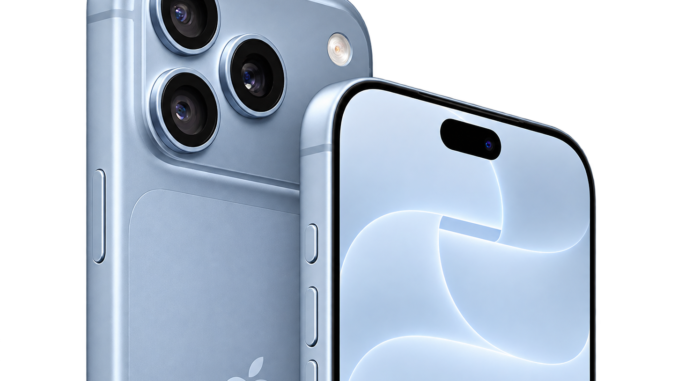
For the past couple of weeks, I’ve been testing the iPhone 18 Pro Max, the larger version of the otherwise almost identical 18 Pro. The only differences are price, size and battery capacity. More on that later.
I upgraded partly to review the new model and partly because I wanted a larger screen. But I wouldn’t have done so without a generous carrier trade-in allowance that made the phone almost free. It locks me in for another three years, but that’s OK with me.
Marginal improvements
From a hardware standpoint, the difference between the 18 Pro and its predecessor is marginal. I wouldn’t recommend that anyone with an iPhone 17 Pro or even a 16 Pro pay to upgrade, especially since both will run iOS 27 and take advantage of the upgraded Apple Intelligence that turns Siri into a genuinely useful AI product.
What’s new, compared with the nearly equally capable iPhone 17 Pro, is a variable-aperture main camera, a faster processor, improved cooling, longer battery life, faster charging, a smaller Dynamic Island and a new cellular modem. While those features might impress some techies, they are largely irrelevant to the typical user.
Probably the most highly touted improvement is the main camera’s variable aperture, which Apple has emphasized in its marketing. It physically adjusts how much light enters the lens and gives photographers greater control over depth of field, allowing more of a scene to remain in focus or blurring the background to emphasize the subject. Along with a new sensor, this can improve low-light pictures and help keep people in the background of group photos in focus.
It’s useful for photography enthusiasts, but most I know use a more sophisticated camera for demanding photography. Still, the most useful camera is the one you have with you, so I can imagine some people taking advantage of the aperture controls, though I’m not likely to be one of them. The rest of us are unlikely to bother adjusting these controls or notice much difference in everyday pictures.
For most people, a more important upgrade is longer battery life. Apple claims up to 36 hours of video playback on the iPhone 18 Pro, compared with 33 hours on the 17 Pro. The Pro Max gets 45 hours, compared with 39 hours on the previous model. But those are laboratory figures, not necessarily an indication of everyday use. I used mine more than usual during testing but didn’t get nearly that many hours. Still, there are days when it’s hard to recharge, so any additional battery life is welcome.
All lithium-ion batteries gradually lose capacity, so after a year or two you may not get as much battery life as when the phone was new. One way to slow degradation is to limit charging to between 80% and 90% in Settings. Routinely charging to 100% can accelerate degradation, although an occasional full charge is unlikely to cause harm. So charge to 100% when you need it.
On a positive note, Apple has reduced the time to charge from zero to 50% from about 20 minutes on the iPhone 17 Pro to 15 minutes on the 18 Pro, a 25% reduction. But you’ll need a compatible fast charger that can deliver up to 60 watts.
The iPhone 18 Pro also has improved cooling that uses liquid in a sealed chamber to carry heat away from the processor. Apple says it has three times the cooling surface area of the previous model. It’s designed to prevent slowdowns during demanding tasks such as gaming or video editing, but again, it’s of marginal value to most people.
Weight
iPhones keep getting heavier. The iPhone 18 Pro weighs 7.44 ounces and the Pro Max 8.78 ounces. That’s 2.3% and 6.8% heavier, respectively, than last year’s models, and about 12.5% heavier than their iPhone 15 counterparts.
With the lightest case I could find and a 0.63-ounce Ohsnap ring, my iPhone 18 Pro Max weighs nearly 11 ounces, which is considerable but manageable. That ring, by the way, makes it easier for me to grip the phone, partially relieving the impact the phone’s weight. It also works as a stand, which I find very handy when viewing media.
Regular vs. Max
I’ve gone back and forth between regular-sized phones, typically with 6.3-inch displays, and larger models approaching 7 inches, including Apple’s 6.9-inch Pro Max and similarly sized phones from Google, Samsung and others.
The advantages of larger phones are screen size and, typically, battery life. The disadvantages are size and weight. Many people prefer the larger screen for videos or pictures, but for me, a big reason is the more spacious keyboard, about 9% wider than on the regular Pro, giving my fingers more room when typing. If you type one-handed, you’ll find it harder to reach some keys on the larger phone.
I’m hardly alone in choosing the larger version. According to PhoneArena, citing research from Consumer Intelligence Research Partners, the iPhone 17 Pro Max accounted for 26% of U.S. iPhone sales in the first quarter of 2026, compared with 24% for the smaller Pro.
Visit a store to compare phone sizes
Before buying, I recommend going to a store, holding different-sized phones to judge their weight and height, typing on their keyboards and seeing if the larger one fits in your pocket. The Max fits well in most of my pants pockets but can be a tight squeeze in some. If the display phone is tethered, as is typical at Apple stores, pull out enough slack in the cord so it doesn’t affect your perception of its weight.
If you bought an iPhone in the last couple of years, there aren’t compelling reasons to upgrade. But if you have an older iPhone, especially an iPhone 15 or earlier model other than the 15 Pro, you might consider upgrading for Apple Intelligence and the significantly improved Siri AI in iOS 27.
Larry Magid is a tech journalist and internet safety activist. Contact him at larry@larrymagid.com.