By Larry Magid
This post first appeared in the Mercury News
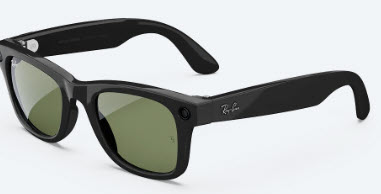
I recently purchased Ray-Ban Meta Wayfarer Gen 2 smart frames, which can serve as regular sunglasses or prescription glasses as you go about your day. Mine have prescription lenses, so I wear them all the time. That means I can use the speakers built into the frames to listen to music and other audio from my phone, make phone calls, dictate text messages, ask questions via Meta AI and capture photos and videos. And although they don’t pretend to be hearing aids, a new “conversation focus” feature works surprisingly well, even in loud environments.
I can also use them to translate what’s in front of me, such as a menu in a foreign country. The glasses can also translate incoming voices in real time, currently supporting 14 languages. But it’s one-way. You can hear what others are saying in your language, but they can’t hear your words in theirs.
The Gen 2 version is nearly identical to its Gen1 predecessor, except for higher resolution (“3K Ultra HD”) video capture and, more important, a longer lasting battery. Gen 1 was rated for 4 hours, but I rarely got even 3 hours of use. Gen 2 is rated for 8 hours, though mine typically run for about 6 hours on a charge, which is still a big improvement. Battery life depends on what you’re doing and how often you interact with the glasses. The charging case can give you up to 48 hours of additional charges without a plug, but it’s a pretty big case to carry in a pocket. Meta would be smart to offer a more portable optional charging cable.
I paid $379 for the Gen 2 Wayfarer frames and popped out the clear glass and popped in the prescription lenses from my Gen1 pair. The Gen 1 version is discounted to $224, but I don’t recommend them because of the limited battery life.
There are other frame options from both Ray-Ban and Oakley. Although my prescription lenses work on the standard frames, some don’t, which is why there is now a $500 version that accommodates a wider range of prescriptions.
The company also offers Meta Ray-Ban Display, starting at $799, which has a small see-through display on one of the lenses for turn-by-turn directions, live translations and message replies that you can see in your field of view.
Camera is good but not as good as phone
Even though the camera is reportedly the most popular feature, I don’t take many pictures or videos with it. Even though it’s good, it’s not quite as good as the one built into my phone. But there are times when I want to quickly snap a picture of a scene that might not be there by the time I get out my phone, such as when my granddaughter is doing something particularly cute. It’s also kind of interesting to record video as you walk around, enabling the camera to capture your view of your surroundings. Bystanders can see a small light on the frame while the camera is in use, but I suspect most people wouldn’t know what that light means.
Describes surroundings and answers questions
One thing I do find useful is being able to say, “look and tell me what you see.” It will take a picture and then describe it to you through the speakers in the frames. This was especially helpful when I was visiting the Asian Art Museum in San Francisco. Rather than stop to read each sign near the exhibits, I asked the glasses to take a picture and describe what it said and listened as I walked around looking at artifacts. I once used my voice to have it take a picture of the license plate of a car in front of me that was driving in a dangerous manner. Had I used my phone, I, too, would have been driving dangerously.
I like having the ability to ask Meta AI questions hands free while I’m walking, cycling or driving. Like ChatGPT and other large language models, Meta AI can answer almost any question you might ask. These models keep getting better and are right more often than they’re wrong, but they do make mistakes, so it’s important not to rely on them for important information without verifying it from a trusted source.
Sound and conversation focus
The glasses have small open ear speakers in each temple, which sound good, though not as good as high-quality earbuds. You can control the volume by swiping forward or backward on the right temple. In addition to listening to audio, you can also make and take calls. The callers sound loud and clear, and people I’ve spoken with tell me that my voice also sounds fine. If a call comes in, I can answer it by tapping on the glasses, and it’s kind of liberating to be able to have a conversation without taking out my phone or inserting earbuds.
The new conversation focus, which requires that you enter the early access program, works surprisingly well as long as you’re directly across from the person speaking. It amplifies the voice and makes it a bit brighter to help distinguish it from background noise. It doesn’t pretend to be a hearing aid, but it can help. I tested it by playing loud restaurant sounds on my computer while listening to someone speaking in front of me. Her voice was at least as clear as when I wore hearing aids or Apple earbuds, which now have hearing aid functionality, but only if the person is nearby.
The glasses require a smartphone running the Meta AI app, which you can use to set up the device, including connecting it to a music app. It supports Apple and Amazon Music. iHeart and Spotify directly, which allows you to play a song by just saying something like “Hey Meta, play the Beatles.” It also acts as a Bluetooth speaker and microphone for any other app on your phone that supports audio. You also use the app to download any pictures or videos you’ve captured with the glasses.
They sometimes annoy my wife
One downside of using them as a listening device is that people around you have no way of knowing if you’re listening to an audio source. My wife gets annoyed sometimes when she wants to speak with me and has to compete with whatever I’m listening to. That would also be true if I were wearing earbuds, but at least she would see that I have them on.
These smart glasses haven’t made me any smarter, but they can read a museum sign, decipher foreign languages, answer phone calls, take pictures, answer questions and play music. Now if only they could figure out how to stop me from annoying my wife.
Disclosure: Larry Magid is CEO of ConnectSafely, a nonprofit internet safety organization that receives financial support from Meta and other companies. Contact him at larry@larrymagid.com.